
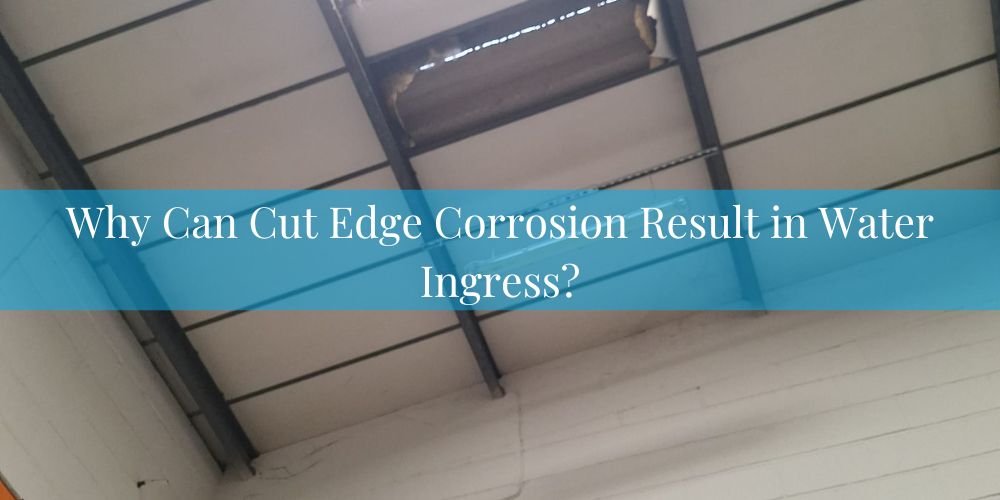
Cut edge corrosion can allow water ingress by deteriorating the protective coating on roofing materials, leading to exposed metal edges that rust and create pathways for moisture penetration. Due to the UK's variable weather, with frequent rain and humidity, roofing systems are particularly susceptible to this kind of damage if not properly maintained. Over time, the rusting, expansion, and contraction of metal can compromise the structural integrity of the roof, leading to leaks and further deterioration if not addressed promptly.
For UK commercial and industrial building owners and facility managers, understanding the implications of cut edge corrosion is crucial for maintaining roof integrity and preventing water-related damages. Below, we will delve deeper into the causes of cut edge corrosion, its impact on water ingress, and effective strategies to protect your commercial roofing assets from this pervasive issue.
What Is Water Ingress?
Water ingress refers to the unwanted penetration of water into a building or roofing system. In the context of metal roofing, it often occurs through seams, fixings, or compromised coatings where protective barriers have failed. Industrial roofs are particularly vulnerable due to their large surface areas, complex joints, and long-term exposure to harsh weather. One of the most common contributors to water ingress in these systems is cut edge corrosion, where the unsealed edges of coated metal sheets begin to deteriorate. As the factory-applied coatings break down at the sheet edges, rust develops and creates pathways for moisture to seep into the structure. This ingress can lead to internal dampness, insulation damage, and eventual structural degradation. Preventing water ingress requires proactive treatment of cut edges, regular inspection, and the use of durable coatings or edge sealing systems. Addressing early signs of corrosion is essential to maintaining a watertight, long-lasting industrial roof.
What Are The Consequences Of Water Ingress For Industrial And Commercial Roofs?
Water ingress can lead to a wide range of structural and financial problems if left unaddressed. In industrial and metal roofing systems, it often results in internal dampness, corrosion of metal components, and damage to insulation materials. Over time, persistent moisture can compromise roof fixings, cause ceiling staining, and promote mould growth within the building. When associated with cut edge corrosion, water ingress accelerates the breakdown of protective coatings and allows rust to spread deeper into the metal substrate. This not only shortens the lifespan of the roof but also increases maintenance and repair costs. In severe cases, it can disrupt operations, damage stored goods, or even lead to health and safety issues. Businesses with untreated water ingress may face higher insurance premiums and regulatory compliance risks. Preventative maintenance and early treatment are essential to avoiding these costly and disruptive consequences.
Have a question about an upcoming project?
How Does Cut Edge Corrosion Occur?
Cut edge corrosion occurs when the protective coating on a metal roof sheet is cut during installation, exposing the bare steel edge. Once exposed, the steel reacts with moisture and oxygen in the air, triggering oxidation and the formation of rust. This corrosion typically starts at the sheet edge and gradually spreads beneath the remaining coating, causing it to delaminate. Harsh environmental conditions, such as coastal air or industrial pollutants, can accelerate the process significantly. Over time, this leads to structural weakening and potential failure of the roof sheet if left untreated.
- Factory-Coated Steel Sheets Are Cut During Installation
- Bare Steel Edges Are Exposed to the Environment
- Moisture and Oxygen Trigger Oxidation
- Corrosion Spreads Under the Coating
- Environmental Conditions Make It Worse
- The Process Continues Until the Sheet Fails
1. Factory-Coated Steel Sheets Are Cut During Installation
Cut edge corrosion begins at the point where pre-coated steel sheets are trimmed to fit specific roof or wall dimensions. These sheets are typically manufactured with a protective coating such as plastisol, PVDF, or polyester, which is applied to the top and bottom surfaces to guard against moisture, oxygen, and airborne contaminants. However, the protective coating does not extend to the edges of the sheet during production. When the sheet is cut on-site, the exposed edge reveals the bare steel substrate with no corrosion protection. This uncoated edge becomes a vulnerable point where deterioration can begin as soon as it is exposed to the elements.
2. Bare Steel Edges Are Exposed to the Environment
Once the steel sheet has been cut, the exposed edge is no longer protected by any coating and becomes directly vulnerable to environmental conditions. These bare edges are immediately exposed to air, moisture, and airborne contaminants such as salt or industrial pollutants. Unlike the factory-coated surfaces, which are sealed against corrosion, the raw steel at the edge lacks any barrier to prevent oxidation. This makes the edge the most susceptible part of the sheet, and it is often the first area where corrosion begins. Even in relatively mild climates, the combination of moisture and oxygen can trigger the early stages of rust formation at these unprotected points.
3. Moisture and Oxygen Trigger Oxidation
When moisture from sources such as rain, condensation, or high humidity comes into contact with the exposed steel edge, it combines with oxygen in the air to initiate a chemical reaction. This reaction is known as oxidation and leads to the formation of iron oxide, commonly referred to as rust. Rust is the visible sign of early-stage corrosion and indicates that the protective integrity of the steel has already been compromised. The process begins slowly but accelerates over time, especially if the environment remains damp or if the corrosion is not treated. Once oxidation starts, it can spread underneath the surrounding coating and weaken the structure of the sheet.
4. Corrosion Spreads Under the Coating
Once rust forms at the exposed cut edge, it rarely remains confined to that area. The corrosion begins to migrate beneath the adjacent factory-applied coating, gradually lifting it away from the steel surface in a process known as sheet delamination. As the coating loses adhesion, it creates small gaps that allow even more moisture and oxygen to penetrate. This increased exposure accelerates the corrosion process and causes the affected area to expand over time. If left untreated, the surrounding coating continues to peel away, leading to more widespread damage across the sheet.
5. Environmental Conditions Make It Worse
The rate at which cut edge corrosion progresses is heavily influenced by the surrounding environment. In areas with harsh conditions, such as coastal regions or industrial zones, the process can accelerate significantly. Salt-laden air, airborne chemicals, acid rain, and consistently high humidity all increase the amount and frequency of moisture exposure. These elements create a more aggressive atmosphere that intensifies the oxidation of exposed steel edges. As a result, corrosion can develop more quickly and spread more extensively than it would in a milder climate.
6. The Process Continues Until the Sheet Fails
If no protective action is taken, cut edge corrosion continues to spread beyond the initial exposed area. As the rust expands and the coating delaminates, more of the steel becomes vulnerable to moisture and air. Eventually, the corrosion compromises the structural integrity of the sheet, leading to physical weakening and the development of gaps or perforations. These openings allow water to penetrate the roofing system, resulting in water ingress that can damage insulation, internal finishes, or stored goods. In advanced cases, the only solution may be full sheet replacement, which is far more costly than early treatment.
How Does Cut Edge Corrosion Lead to Water Ingress?
Cut edge corrosion compromises protective coatings, leading to metal degradation and eventual water ingress. Such corrosion typically occurs at the exposed edges of coated metal sheets, where protective coatings are weakest. As the metal degrades, gaps form, allowing water to penetrate and cause further structural damage.
The following list details how the process of cut edge corrosion significantly contributes to water ingress:
- Compromised Coating: Corrosion weakens the protective metal coating at edges.
- Metal Degradation: Corroded metal deteriorates, leaving openings for water infiltration.
- Gap Formation: Corroded areas form gaps that direct water into the structure.
- Seeping Water: Water enters through gaps, exacerbating corrosion and structural damage.
- Structural Integrity: Continuous ingress undermines the building’s structural soundness.
1. Compromised Coating: Corrosion weakens the protective metal coating at edges.
Compromised coating is ccause by the deterioration of a protective layer on metal surfaces. In cut edge corrosion, the edges are more exposed, leading to faster coating degradation. When the protective coating is compromised, the underlying metal becomes exposed to environmental elements like moisture. This weakened coating is unable to prevent water contact, thereby initiating corrosion and leading to water ingress.
2. Metal Degradation: Corroded metal deteriorates, leaving openings for water infiltration.
Metal degradation occurs as the metal loses its integrity and structural properties. Once the protective coating fails, the metal is directly exposed to corrosive elements, accelerating its degradation. Deteriorating metal forms pits and cracks, creating potential water entry points. This degradation further allows water to seep through openings, worsening water ingress and damaging the building structure.
3. Gap Formation: Corroded areas form gaps that direct water into the structure.
Gap formation describes the appearance of spaces or openings caused by material loss. Corrosion leads to the thinning and fracturing of metal, creating physical gaps at edges. These gaps act as channels, directing water into the internal areas of the structure. Water trapped in these gaps accelerates corrosion, increasing the size and number of openings and permitting more water ingress.
4. Seeping Water: Water enters through gaps, exacerbating corrosion and structural damage.
Seeping water is the gradual penetration of water through porous or compromised materials. As water infiltrates through corrosion-formed gaps, it becomes trapped and continues the cycle of corrosion and degradation. The presence of water enhances the electrochemical reactions that drive further corrosion. Prolonged exposure to seeping water can lead to significant damage, increasing repair costs and reducing the building's lifespan.
5. Structural Integrity: Continuous ingress undermines the building’s structural soundness.
Structural integrity relates to the ability of a structure to bear loads without failure. Water ingress through corroded edges weakens the overall stability of the building, leaving it vulnerable to further damage. This ongoing process compromises load-bearing elements and may lead to structural failures. Efforts to prevent cut edge corrosion are therefore critical to maintaining the structural integrity of metal-clad buildings.
What Are the Potential Consequences of Water Ingress from Cut Edge Corrosion?
Water ingress from cut edge corrosion can lead to structural damage and reduced building integrity. Over time, this kind of corrosion can allow water to seep into roof structures, causing further degradation and increased maintenance costs. This can ultimately lead to safety hazards and increased repair expenses if not promptly addressed.
The following are the key consequences of water ingress due to cut edge corrosion:
- Structural Weakening: Causes deterioration of structural components and affects load-bearing capacity.
- Mould and Mildew Growth: Promotes unhealthy indoor conditions due to moisture build-up.
- Decreased Thermal Efficiency: Insulation becomes less effective, leading to higher energy costs.
- Increased Maintenance Costs: Constant repairs and replacements become necessary due to persistent water damage.
- Aesthetic Damage: Corrosion and water stains compromise the building's outer appearance and value.
1. Structural Weakening: Causes deterioration of structural components and affects load-bearing capacity.
Structural weakening is the loss of strength in materials which make up a building's framework. When water seeps in due to cut edge corrosion, structural components, such as beams and supports, can deteriorate over time. This weakened structure may compromise the overall stability and safety of the building. Unchecked water ingress can lead to significant structural failures, potentially leading to costly repairs or even catastrophic building collapse.
2. Mould and Mildew Growth: Promotes unhealthy indoor conditions due to moisture build-up.
Mould and mildew growth is caused by persistent moisture creating a breeding ground for spores. Cut edge corrosion which deteriorates to an extent which allows water ingress can lead to damp conditions, ideal for mould and mildew. This not only affects air quality but can also pose health risks to occupants. Addressing cut edge corrosion is essential to maintaining a healthy living or working environment, as prolonged exposure to such conditions can lead to respiratory problems and other health issues.
3. Decreased Thermal Efficiency: Insulation becomes less effective, leading to higher energy costs.
Decreased thermal efficiency means a building loses its ability to retain heat or coolness effectively. When water ingress occurs through cut edge corrosion, insulation materials can become saturated and lose their insulating properties. This inefficiency results in higher energy use as heating or cooling systems have to work harder to maintain desired indoor temperatures. Improving or maintaining the building envelope through corrosion prevention is crucial for energy efficiency and cost savings.
4. Increased Maintenance Costs: Constant repairs and replacements become necessary due to persistent water damage.
Increased maintenance costs refer to the rising expenses associated with frequent repairs. Water ingress through cut edge corrosion necessitates regular maintenance to address the ongoing damage it causes. This can lead to a significant financial burden over time, as repeated repairs and replacements become inevitable. Proactively managing cut edge corrosion can help reduce long-term maintenance costs and preserve building value.
5. Aesthetic Damage: Corrosion and water stains compromise the building's outer appearance and value.
Aesthetic damage indicates deterioration which negatively affects the visual appeal of a building. Visible rust, water stains, and the distortion of surfaces due to cut edge corrosion can diminish a property's aesthetic appeal and market value. This damage can create a poor impression, affecting potential resale or leasing opportunities. Protective measures and regular inspections can help maintain the building's aesthetic integrity and curb appeal.
Understanding the risks associated with cut edge corrosion is vital for maintaining the integrity of roofs in the United Kingdom. This type of corrosion, typically affecting the cut edge of metal roofing sheets, can lead to significant problems such as water ingress, which compromises the structural soundness and insulation of your building. Regular inspections and timely interventions are crucial to preventing costly repairs and ensuring the longevity of your roof. By choosing the right protective treatments and maintenance strategies, you can safeguard your investment against the challenging weather conditions common in the United Kingdom, thereby enhancing the overall durability of your structure.
If you require more information on addressing cut edge corrosion or need professional advice on maintaining your roof in the UK, please get in touch with us through our contact form. Our expert team is ready to assist you in finding the best solutions to protect your building from water ingress and other damage associated with cut edge corrosion.