
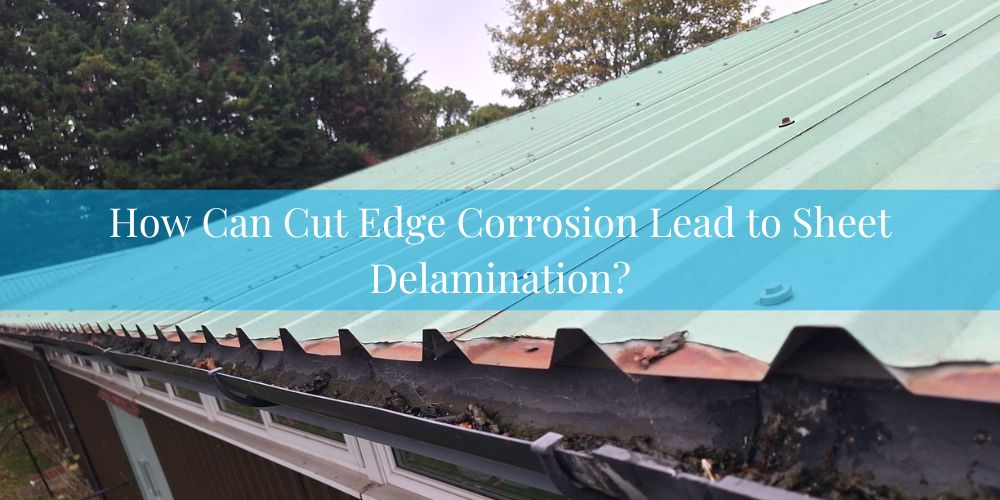
In the United Kingdom, cut edge corrosion can lead to sheet delamination by compromising the protective coatings of the metal sheets, allowing moisture ingress and ultimately weakening the structural integrity of the sheet layers. British weather conditions, characterised by frequent rain and humidity, can accelerate cut edge corrosion, especially in coastal areas or industrial regions with high pollution. As the edges of metal sheets corrode, the separation between the layers of the sheet can occur, necessitating expensive repairs or replacements for affected commercial buildings. For commercial building owners and facility managers in the UK, understanding the connection between cut edge corrosion and sheet delamination is vital to maintaining the structural integrity of their properties. In this blog, we will explore how UK weather conditions contribute to this issue, examine preventative measures, and provide insights into effective maintenance strategies.
What Is Sheet Delamination?
Sheet delamination, refers to the separation of the metal sheet’s protective coating from the steel substrate, usually starting at the cut edge or overlap area. As corrosion spreads beneath the coating,often driven by moisture, oxygen, and UV exposure, the bond between the coating and the metal weakens. This results in the coating peeling, bubbling, or flaking away, exposing more bare metal to the elements. Delamination is a sign cut edge corrosion has progressed beyond surface-level damage and typically requires more than just edge treatment, often necessitating a full overlay system to restore weatherproofing and structural integrity.
Why Is Sheet Delamination A Serious Issue On Industrial And Commercial Metal Roofs?
Sheet delamination is a serious issue on industrial and commercial metal roofs because it compromises the protective barrier that prevents corrosion. When the factory-applied coating separates from the steel substrate, the exposed metal becomes vulnerable to moisture, oxygen, and airborne pollutants. This accelerates rust formation, particularly at cut edges and overlaps where water can track in unnoticed. Over time, corrosion can spread beneath the laps, weakening structural joints and leading to leaks. Delamination also reduces the effectiveness of standard maintenance treatments, as edge-only repairs won’t bond to already failing surfaces. It can shorten the roof’s service life significantly and increase long-term repair costs. In busy commercial environments, leaks and structural issues caused by delamination can disrupt operations or damage stock. Preventative refurbishment, such as full overlay systems, is often required to restore integrity and avoid premature roof failure.
Have a question about an upcoming project?
What is Cut Edge Corrosion and Why Does it Occur?
Cut edge corrosion is the deterioration of exposed metal edges on coated steel sheets. It occurs when protective coatings fail at cut edges, leaving the bare metal exposed to environmental factors, leading to rust and structural damage. This typically affects buildings in coastal areas where salt and moisture accelerate the process. Cut edge corrosion arises due to several contributing factors:
- Exposed Metal Edges: Unprotected edges are vulnerable to environmental moisture.
- Coating Failure: Protective layers degrade over time under harsh weather conditions.
- Salt Exposure: Coastal areas increase risk due to salt accelerating corrosion.
- Poor Maintenance: Lack of regular inspections allows undetected damage to worsen.
- Improper Installation: Incorrect handling during installation can compromise protective coatings.
1. Exposed Metal Edges: Unprotected edges are vulnerable to environmental moisture.
Exposed metal edges are sections of steel where the protective coating is insufficient or absent. When these edges are exposed to environmental moisture, particularly rain or high humidity, it leads to oxidation. Over time, this results in rust, which can compromise structural integrity if left unchecked.
2. Coating Failure: Protective layers degrade over time under harsh weather conditions.
Coating failure refers to the breakdown or wearing away of protective surface layers. On metal surfaces, the degradation of these layers allows moisture and air to reach the bare steel. This exposure accelerates corrosion processes, especially in harsh or fluctuating weather conditions.
3. Salt Exposure: Coastal areas increase risk due to salt accelerating corrosion.
Salt exposure refers to the presence of salt particles in the atmosphere due to proximity to oceans or sea sprays. Salt acts as a catalyst in the corrosion process by creating an electrochemical environment conducive to rust formation. This often results in rapid deterioration of metal surfaces not adequately protected against salt ingress.
4. Poor Maintenance: Lack of regular inspections allows undetected damage to worsen.
Poor maintenance is a neglectful approach to the upkeep of structural components. Without regular inspections, small signs of corrosion can go unnoticed and escalate into significant issues. Routine checks and timely maintenance are critical to preventing extensive damages and prolonging the lifespan of materials.
5. Improper Installation: Incorrect handling during installation can compromise protective coatings.
Improper installation occurs when incorrect techniques or materials are used during the application process. During installation, mishandling can damage protective coatings, leaving vulnerable areas exposed to the elements. Ensuring skilled techniques and proper handling during installation can mitigate early onset of cut edge corrosion.
How Does Cut Edge Corrosion Contribute to Sheet Delamination?
Cut edge corrosion can lead to sheet delamination by compromising the bond between layers. This results from the erosion of protective coatings and exposure to the elements, accelerating deterioration. By affecting the integrity of the sheet, corrosion weakens the overall structure.
Here are the key factors on how cut edge corrosion leads to sheet delamination:
- Exposure of Metal: Causes rapid oxidation and degradation of metallic components.
- Compromised Protective Layer: Erosion of coatings exposes the core material to environmental elements.
- Increased Moisture Penetration: Facilitates water ingress, exacerbating delamination process.
- Material Expansion: Corrosion by-products cause expansion that disrupts structural integrity.
- Accelerated Structural Weakness: Continuous corrosion propagates delamination throughout the material layers.
1. Exposure of Metal: Causes rapid oxidation and degradation of metallic components.
Metal exposure occurs once the protective coatings are eroded. This condition accelerates oxidation, causing rust and weakening the overall material strength of the sheet. The degradation caused by oxidation directly affects the integrity and longevity of the material. Once the metal is exposed, oxygen reacts with iron elements, forming rust. This chemical process gradually eats away at the metal, leading to structural vulnerability. Additionally, the constant battering from weather conditions further accelerates this degradation process.
2. Compromised Protective Layer: Erosion of coatings exposes the core material to environmental elements.
The protective layer of a sheet guards against environmental damage. Erosion of this coating leaves the underlying material vulnerable to adverse weather conditions. Over time, this exposure facilitates corrosion-related damage. Without this protective barrier, moisture and air infiltrate, aggravating the metal's natural deterioration. The gradual breakdown of the coating paves the way for more severe structural problems, promoting further delamination. This cycle exacerbates with continued environmental exposure, quickening the pace at which delamination occurs.
3. Increased Moisture Penetration: Facilitates water ingress, exacerbating delamination process.
Moisture penetration occurs when protective coatings are compromised. This water ingress can damage adhesive bonds, leading to layer separation and delamination. Water accelerates the corrosion process by introducing electrolytes that facilitate metal oxidation. The greater the moisture penetration, the more significant the threat to sheet integrity. As water permeates the structure, it weakens the adhesive bonds holding the layers together. This leads to a snowball effect, with increasing amounts of water accelerating delamination. The presence of moisture also promotes further corrosion, perpetuating structural degradation over time.
4. Material Expansion: Corrosion by-products cause expansion that disrupts structural integrity.
When metal corrodes, it produces rust, which occupies more space than the original metal. This expansion creates internal pressures that disrupt the bonding between sheet layers. Over time, this leads to mechanical stress and structural failure. Corrosion produces oxides that exacerbate the expansion-related delamination effect. This expansion can exert physical force on the sheet, overcoming adhesive bonds and causing layers to separate. Pressure from expanding corrosion by-products accelerates delamination. As a result, small corrosion sites can initiate extensive delamination if left unchecked.
5. Accelerated Structural Weakness: Continuous corrosion propagates delamination throughout the material layers.
Ongoing corrosion progressively weakens the sheet structure, accelerating delamination across the layers. This is compounded by cumulative damage from other factors like moisture ingress and protective layer erosion. Each corroded layer contributes to the sheet's weakened state, amplifying its fragility. The shifts in structural coherence caused by persistent corrosion trigger further delamination. As the material layers peel away, the sheet loses its designed integrity, leading to potential failure. Ultimately, without intervention, progressive corrosion transforms minor damage into major structural compromise, affecting the sheet's intended function and longevity.
What Preventative Measures Can Be Taken to Avoid Cut Edge Corrosion?
To avoid cut edge corrosion, protective coatings and regular maintenance are essential. Cut edge corrosion is a common issue in metal cladding and roofing, resulting from exposure to elements and inadequate protective measures. By implementing proper preventative strategies, the lifespan of metal installations can be significantly extended.
Here are key preventative measures to mitigate cut edge corrosion:
- Protective Coatings: Apply high-quality protective coatings regularly to all exposed metal surfaces.
- Moisture Management: Ensure effective drainage systems to prevent water accumulation on metal edges.
- Material Selection: Choose corrosion-resistant materials, like pre-coated metals or galvanised options.
- Regular Inspections: Conduct routine inspections to identify and rectify early signs of corrosion.
- Professional Installation: Ensure installation is done by experienced professionals to minimise potential vulnerabilities.
1. Protective Coatings: Apply high-quality protective coatings regularly to all exposed metal surfaces.
A protective coating serves as a barrier against environmental elements that cause corrosion. For cut edge corrosion, this is vital as exposed edges are most prone to damage. High-quality coatings prevent moisture and oxygen from contacting the metal substrate, thus preserving the metal integrity. Regular application of these coatings ensures continuous protection and helps in maintaining the aesthetic and functional quality of the metal installations. Depending on environmental conditions, different types of coatings, such as paints or primers with anti-corrosive properties, can be used to reinforce this protection.
2. Moisture Management: Ensure effective drainage systems to prevent water accumulation on metal edges.
Moisture management involves designing and maintaining systems that effectively redirect water away from structures. Excessive moisture is a primary contributor to cut edge corrosion, making effective drainage crucial. By preventing water pooling on metal surfaces, the risk of corrosion is significantly reduced. Installing appropriate guttering, downspouts, and flashing ensures that water is quickly and efficiently redirected away from vulnerable areas. Moreover, ensuring that these drainage systems are regularly cleared of debris will maintain their effectiveness over time.
3. Material Selection: Choose corrosion-resistant materials, like pre-coated metals or galvanised options.
Material selection involves choosing metals that inherently resist corrosion due to their composition. Pre-coated or galvanised metals come with a protective layer that shields the metal from environmental exposure. Selecting such materials reduces the initial risk of cut edge corrosion significantly. When new construction or repairs are undertaken, opting for these corrosion-resistant materials not only extends the lifespan of the installations but also reduces the need for frequent maintenance and coating applications.
4. Regular Inspections: Conduct routine inspections to identify and rectify early signs of corrosion.
Regular inspections involve systematically examining metal surfaces for any signs of wear or damage. Early identification of corrosion allows for timely interventions before significant damage occurs. Paying particular attention to seams, joints, and edges can prevent minor issues from escalating. Through these inspections, maintenance teams can also assess the efficacy of protective measures and adjust them as needed to improve protection against corrosion.
5. Professional Installation: Ensure installation is done by experienced professionals to minimise potential vulnerabilities.
Professional installation refers to the process of having qualified individuals handle the assembly of metal structures. Proper installation is crucial, as poor workmanship can create conditions that facilitate cut edge corrosion. Experienced professionals ensure that all components are correctly aligned and secured, reducing exposure to corrosive conditions. They also apply industry standards and best practices to ensure that none of the installed materials are unnecessarily exposed or compromised during the process. This proactive approach enhances the durability and longevity of the installations.
Understanding the implications of cut edge corrosion is vital for maintaining the structural integrity and performance of metal roofing systems in the United Kingdom. When left unchecked, cut edge corrosion can lead to sheet delamination, significantly undermining the durability and aesthetic value of your roof. This issue is particularly pressing in the UK's variable climate, where frequent rain and temperature fluctuations exacerbate the problem. To protect your roofing investment, regular inspections, timely repairs, and the application of specialised protective coatings are essential. By addressing cut edge corrosion early on, you can enhance the longevity of your roof, preventing costly replacements and preserving its visual appeal.
If you are concerned about cut edge corrosion on your roof or require expert guidance on appropriate interventions for your property, please don’t hesitate to get in touch with us through our contact form. Our dedicated team in the United Kingdom is ready to offer tailored solutions to ensure your roof remains in optimal condition for years to come.