
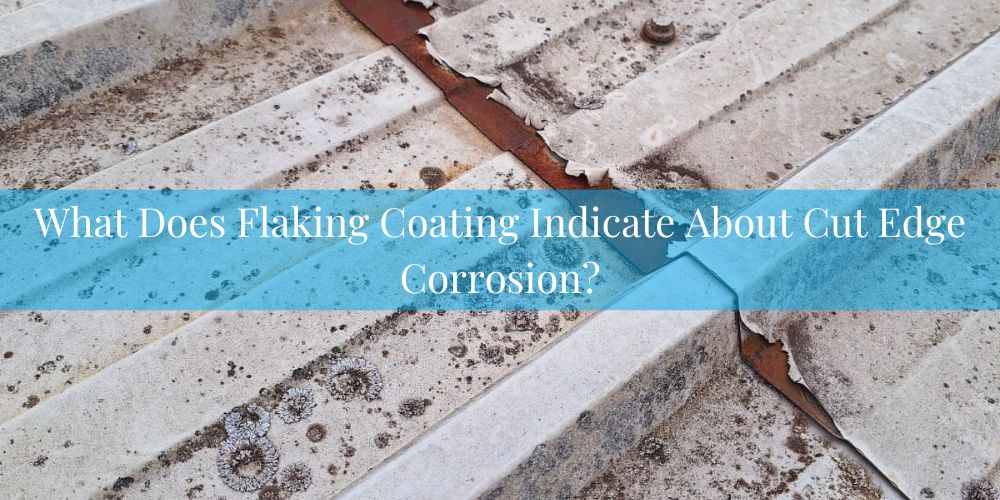
Flaking and coating lift on cut edges signal the onset of severe corrosion, which can compromise the structural integrity of metal roofs and cladding systems if not addressed promptly.
The damp and variable UK weather accelerates the progression of cut edge corrosion, particularly in older commercial buildings where protective coatings have begun to fail. Regular maintenance, including the reapplication of high-quality edge protection treatments, is essential to prevent significant rust formation and costly repairs.
For UK commercial property owners and facility managers, understanding cut edge corrosion can save thousands in repair costs and extend the life of roofing and cladding systems. In this blog, we will delve into how flaking and coating lift affect corrosion progression and discuss effective strategies for its prevention and management in the British climate.
What Is Flaking And Coating Lift On A Commercial Roof?
Flaking and coating lift on a commercial roof refer to the breakdown of the protective finish applied to metal roof sheets, typically plastisol or polyester. This finish is designed to shield the steel from environmental elements, but over time, factors like UV degradation, acid rain, temperature fluctuations, and trapped moisture begin to compromise its integrity. As the coating loses adhesion, it starts to crack, blister, curl, or peel away—often beginning at vulnerable areas such as cut edges, side laps, and around fixings where the factory coating is thinnest or damaged during installation. Once the protective layer lifts, the exposed steel beneath becomes susceptible to oxidation, triggering cut edge corrosion and rust development. In early stages, flaking may appear as small chips or blistered patches, but it can quickly accelerate if water gets trapped under the coating, especially on north-facing roof slopes or neglected gutters. Identifying and treating coating lift early is essential to prevent costly structural deterioration and to restore long-term waterproofing integrity.
How Can You Spot Flaking And Coating Lift On A Commercial Metal Roof?
You can spot flaking and coating lift on a commercial metal roof by closely examining the sheet edges and overlaps for signs of peeling or bubbling paint. These areas often appear discoloured, with the factory-applied coating curling away from the steel beneath. Flaking typically begins at the cut edges of coated sheets, where exposure to UV light, moisture, and oxygen is most intense. In advanced cases, you may see rust staining or exposed bare metal where the protective layer has fully detached. Touching the area may reveal brittle, powdery paint fragments that easily break away. Regular roof inspections, especially around laps and fixings, are key to identifying these issues early before corrosion worsens.
Have a question about an upcoming project?
What Is Cut Edge Corrosion and Why Does It Occur?
Cut edge corrosion refers to the degradation of metal cladding at cut edges, caused by exposure to environmental elements and moisture ingress. It often occurs when protective coatings are damaged or absent at the metal's edges, allowing rust to form and spread. This phenomenon can compromise the structural integrity and aesthetics of buildings, necessitating timely repairs and maintenance.
The process that leads to cut edge corrosion can be understood through several critical factors:
- Protective Coating Damage: Exposure leads to coating breakdown at cut edges.
- Moisture Ingress: Moisture penetrates unprotected edges, initiating corrosion.
- Environmental Exposure: Constant exposure to harsh weather accelerates edge degradation.
- Improper Installation: Poor installation methods may damage protective layers.
- Material Quality: Low-quality materials have less corrosion resistance at edges.
1. Protective Coating Damage: Exposure leads to coating breakdown at cut edges.
Protective coating damage occurs when the coating on metal cladding is compromised, particularly at cut edges. When a coating is damaged, it exposes the underlying metal to environmental elements, leading to rust formation and corrosion. Edge areas are particularly vulnerable because they might not be adequately covered during the manufacturing and installation processes. Consistently maintaining and inspecting these coatings can prevent premature coating damage and extend the lifespan of metallic structures.
2. Moisture Ingress: Moisture penetrates unprotected edges, initiating corrosion.
Moisture ingress refers to the penetration of water and moisture into the unprotected cut edges of metal panels. When moisture penetrates these areas, it accelerates corrosion because the metal is unprotected by any sealant or coating. Minimising moisture ingress with proper sealing methods and installation is essential to prevent the onset of cut edge corrosion.
3. Environmental Exposure: Constant exposure to harsh weather accelerates edge degradation.
Environmental exposure entails the constant contact of metal cladding with the elements, such as rain, wind, and sun. Over time, this exposure exacerbates corrosion risk as repeated weather cycles expand and contract the metal, stressing the edges. Understanding local climate conditions and selecting materials accordingly can help mitigate the risks associated with environmental exposure.
4. Improper Installation: Poor installation methods may damage protective layers.
Improper installation involves incorrect techniques that damage or fail to maintain the protective integrity of metallic coatings. Such installations can create gaps or weak points where the coating is thinnest, allowing moisture ingress that leads to corrosion. Ensuring proper training and quality control during installation is vital to protect cut edges and elongate their service life.
5. Material Quality: Low-quality materials have less corrosion resistance at edges.
Material quality refers to the inherent properties of the metal used in construction, including its resistance to corrosion. Low-quality materials typically possess fewer protective features, making them more susceptible at vulnerable points like cut edges post-manufacture. Choosing high-quality, well-coated metals with proven durability can significantly reduce the likelihood of cut edge corrosion.
How Do Flaking and Coating Lift Contribute to the Corrosion Process?
Flaking and coating lift expose underlying metal surfaces to environmental elements, accelerating corrosion. When protective coatings on metal structures begin to flake or lift, they no longer provide complete protection from moisture, oxygen, and other corrosive agents. This exposure facilitates the electrochemical reactions that lead to corrosion, potentially compromising structural integrity.
Here are some key factors detailing how flaking and coating lift accelerate the corrosion process:
- Exposure to Elements: Unprotected metal surfaces face harsh environmental conditions.
- Moisture Penetration: Water seeps through lifted coatings causing oxidation.
- Oxygen Access: Air contact promotes rust formation on exposed metal areas.
- Coating Degradation: Compromised coatings lose their protective effectiveness.
- Metal Surface Damage: Corrosion progresses, weakening structural components.
1. Exposure to Elements: Unprotected metal surfaces face harsh environmental conditions.
Exposure to elements refers to the metal being subjected to environmental factors like moisture, air, and pollutants due to coating failure. When flaking occurs, these elements access the metal's surface directly, initiating corrosion processes such as rusting. As the environment begins its corrosive work unimpeded by protective coatings, the metal's longevity and functionality are quickly threatened.
2. Moisture Penetration: Water seeps through lifted coatings causing oxidation.
Moisture penetration occurs when water infiltrates through gaps or openings in protective coatings. This moisture access fosters oxidation, a primary cause of rust, under the lifted coating. Continual moisture exposure accelerates deterioration by facilitating ongoing electrochemical reactions within the metal substrate.
3. Oxygen Access: Air contact promotes rust formation on exposed metal areas.
Oxygen access describes air reaching metal surfaces through compromised coatings. When oxygen interacts with iron in metal, iron oxide or rust is formed, a common corrosion result. The continual presence of oxygen accelerates this process, further degrading metal due to its reactive nature in moist environments.
4. Coating Degradation: Compromised coatings lose their protective effectiveness.
Coating degradation indicates the breakdown or failure of protective surface films. As commercial and industrial roof coatings degrade, they lose their ability to shield metal from corrosive agents such as water and oxygen. This degradation can stem from age, mechanical damage, or improper application, further expediting the corrosion process.
5. Metal Surface Damage: Corrosion progresses, weakening structural components.
Metal surface damage refers to the integrity loss of metal components due to corrosion. Progressive corrosion depletes metal, leading to pitting, cracking, and eventual failure. Such damage compromises overall structural integrity, contributing to potential safety hazards and increased repair costs.
What Strategies Can Be Adopted to Mitigate Cut Edge Corrosion?
Applying protective coatings, using compatible materials, and ensuring proper maintenance can effectively mitigate cut edge corrosion. This type of corrosion often occurs at exposed metal edges where coatings may be compromised, leading to rust and deterioration. Implementing these strategies helps preserve structural integrity and extend the lifespan of metal components.
To address cut edge corrosion effectively, consider the following strategies:
- Protective Coatings: Apply specialised coatings to prevent moisture exposure and corrosion.
- Material Compatibility: Use materials that minimise galvanic corrosion when in contact with each other.
- Regular Inspection: Identify early signs of corrosion and address damage promptly.
- Sealing Edges: Ensure edges are properly sealed to reduce moisture penetration.
- Tailored Maintenance: Implement a maintenance schedule specific to environmental conditions.
1. Protective Coatings: Apply specialised coatings to prevent moisture exposure and corrosion.
Protective coatings are barriers applied to metal surfaces to shield them from environmental elements. By applying these coatings, cut edge corrosion can be significantly mitigated, preventing moisture from causing rust. Using high-quality coatings specially designed for metal edges ensures longer-lasting protection and reduced repair costs over time.
2. Material Compatibility: Use materials that minimise galvanic corrosion when in contact with each other.
Material compatibility involves selecting metals and coatings that do not accelerate corrosion when in contact. Choosing compatible materials can dramatically reduce cut edge corrosion, especially where different metals meet. This approach leverages an understanding of galvanic series to prevent unwanted electrochemical reactions and prolong component lifespan.
3. Regular Inspection: Identify early signs of corrosion and address damage promptly.
Regular inspection requires systematically checking metal components for signs of corrosion or damage. Frequent inspections enable early detection of cut edge corrosion, allowing for immediate repairs and prevention. Establishing routine checks as part of maintenance procedures ensures any developing issues are quickly addressed, minimizing long-term damage.
4. Sealing Edges: Ensure edges are properly sealed to reduce moisture penetration.
Sealing edges involves applying sealants or covers to prevent moisture ingress at vulnerable points. This technique provides an additional layer of defence against cut edge corrosion by obstructing water access. Proper sealing can be particularly effective in environments with high humidity or frequent precipitation, thereby reducing corrosion risk.
5. Tailored Maintenance: Implement a maintenance schedule specific to environmental conditions.
Tailored maintenance involves creating a maintenance plan that accounts for local environmental factors. Adapting maintenance schedules to specific conditions helps address cut edge corrosion proactively, before it becomes problematic. By acknowledging and preparing for environmental influences, such as salt exposure or temperature fluctuations, maintenance efforts become more efficient and effective.
The progression of cut edge corrosion, particularly in the context of the United Kingdom's varied and often harsh climate, underscores the importance of understanding the implications of flaking and coating lift. These phenomena not only accelerate corrosion but also compromise the structural integrity and aesthetic appeal of metal roofing assets. By recognising the early signs of flaking and coating deterioration, property owners can take timely actions to mitigate further damage. This proactive approach not only preserves the life of the metal but also reduces the need for extensive and costly repairs. Robust coating systems, regularly inspected and refurbished, can significantly extend the lifespan of metal edges, ensuring they withstand the challenging UK weather conditions. Embracing preventive maintenance is key to safeguarding investments and avoiding the pitfalls of unchecked cut edge corrosion.
If you would like to learn more about how to effectively manage and prevent cut edge corrosion in your roofing systems or need advice on your current situation, please reach out to us through our contact form. Our knowledgeable team is ready to provide tailored solutions to help you protect your assets against the elements.