
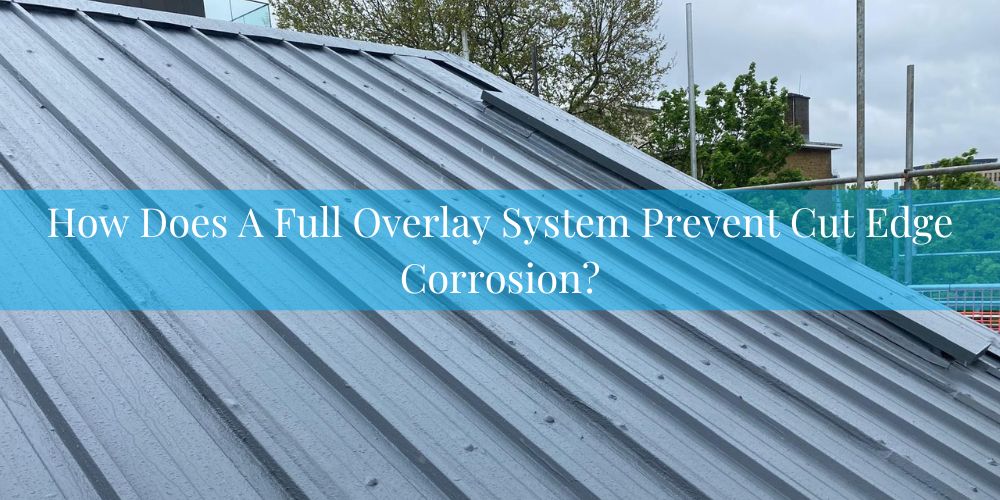
A full overlay system prevents cut edge corrosion in the United Kingdom by providing a protective barrier which shields exposed metal edges from moisture and environmental pollutants. British weather, characterised by frequent rain and humidity, accelerates corrosion processes on unprotected metal surfaces, especially around cut edges. By fully encapsulating these edges, a complete overlay system mitigates the risk of rust and degradation, prolonging the lifespan of metal roofing and cladding components. For commercial building owners and facility managers in the UK, addressing cut edge corrosion is essential to maintaining structural integrity and avoiding costly repairs. In this blog, we’ll delve into how a Full overlay System works, its application process, and the benefits it offers for preserving metal surfaces in the UK's challenging climate.
Why Would A Full Overlay System Be Needed To Treat Cut Edge Corrosion?
A full overlay system is needed when cut edge corrosion has spread beyond the immediate edge and into the sheet laps. In these cases, treating just the visible edge is no longer sufficient to stop water ingress or prevent further rusting. Moisture can track between overlapping sheets by capillary action, leading to hidden corrosion beneath the lap. A full overlay encapsulates the entire affected area, sealing laps and edges in one continuous, flexible coating. This not only halts further corrosion but also reinforces the sheet joint and prevents delamination. It is a long-term solution often required for severe or widespread corrosion, especially when warranties or insurance-backed guarantees are involved.
Is A Full Overlay System The Same As A Commercial Roof Coating?
No, a full overlay system is not the same as a commercial roof coating, although both involve applying protective layers. A full overlay system specifically targets corroded sheet laps and cut edges, sealing them with reinforcement and multiple coatings. In contrast, a commercial roof coating is typically applied across the entire roof surface to improve waterproofing and extend the lifespan of commercial roofs. While both may use similar materials, their purpose, scope, and application areas are different.
Is A Full Overlay System The Same As An Industrial Roof Coating?
No, a full overlay system is not the same as an industrial roof coating. A full overlay system focuses on treating and sealing cut edge corrosion at sheet overlaps using reinforcement and specialised detailing. An industrial roof coating is a broader solution for industrial roofs. Industrial roof coatings are applied over large roof areas to protect against weathering, UV, and general degradation. While both can be part of the same refurbishment project, they serve different functions and are applied in different areas.
What is Cut Edge Corrosion and Why is it a Problem?
Cut edge corrosion is the deterioration of metal at the cut edges of coated steel, leading to structural compromises. It begins at exposed edges where protective coatings have been breached, resulting in rust and decay that spread over time. This form of corrosion can weaken structures, reduce aesthetic appeal, and increase maintenance costs.
Understanding the implications of cut edge corrosion requires addressing several key factors contributing to its development and impact.
- Exposed Edges: Vulnerable points where corrosion commonly initiates.
- Structural Integrity: Sustained damage leads to weakening of metal structures.
- Aesthetic Deterioration: Rust affects the visual appeal of buildings and products.
- Increased Maintenance: Frequent repairs and replacements become necessary.
- Cost Implications: Long-term financial burden due to ongoing repairs.
1. Exposed Edges: Vulnerable points where corrosion commonly initiates.
Exposed edges refer to the bare metal surfaces where protective coatings have been compromised. These areas are particularly susceptible to corrosion because they lack a protective layer. Given that cut edge corrosion often begins at these vulnerable points, protecting exposed edges is crucial to prevent early deterioration. When coated steel is cut during manufacturing or installation, the protective coating is breached, leaving the metal susceptible to environmental factors. Rainwater, oxygen, and even pollutants can quickly oxidise these exposed surfaces, leading to corrosion that might spread underneath the protective coating. By addressing the vulnerabilities at exposed edges, manufacturers and builders can markedly reduce the incidence and progression of cut edge corrosion, safeguarding the integrity of metal structures.
2. Structural Integrity: Sustained damage leads to weakening of metal structures.
Structural integrity refers to the ability of a structure to withstand its intended load without failure or significant deformation. When cut edge corrosion sets in, it can undermine the structural integrity of buildings or products, posing serious safety risks. As corrosion progresses, it eats away at the metal, thinning it and reducing its load-bearing capacity. This weakening of the metal structure can lead to failures, particularly in critical applications like roofing or cladding. Maintaining structural integrity is essential not only for safety but also for ensuring a structure's longevity and reliability, making it imperative to manage and prevent cut edge corrosion effectively.
3. Aesthetic Deterioration: Rust affects the visual appeal of buildings and products.
Aesthetic deterioration refers to the decline in visual quality and appearance of a surface or structure. Cut edge corrosion often manifests visibly as rust, which can be unsightly and deters the perceived value of buildings and products. Buildings with noticeable rust patches can be seen as poorly maintained, negatively impacting the reputation of property owners or manufacturers. This is especially problematic for commercial structures where aesthetics play a significant role in business image. Preventive maintenance and proper treatment of vulnerable areas are essential to preserving both the beauty and functionality of metal surfaces exposed to the elements.
4. Increased Maintenance: Frequent repairs and replacements become necessary.
Increased maintenance underscores the need for regular upkeep and repairs to manage corrosion-related damage. As cut edge corrosion progresses, more frequent interventions are required to address issues before they escalate. Routine repairs may involve recoating affected areas, replacing corroded sections, or using inhibitors to slow down the process. These recurrent maintenance activities can become an ongoing burden both financially and logistically. Implementing effective prevention strategies can lower the effort and resources needed for maintenance while extending the lifespan of metal components.
5. Cost Implications: Long-term financial burden due to ongoing repairs.
Cost implications consider the financial consequences of managing and mitigating cut edge corrosion. The cumulative costs associated with repeated repairs, replacements, and preventive measures can be substantial over time. For large structures or products, the financial impact can be significant, affecting the bottom line for businesses and leading to budget reallocations. In some cases, failure to manage corrosion effectively can result in catastrophic failures, leading to even greater unplanned expenses. By considering cost implications, stakeholders can better strategise investment in corrosion prevention techniques, ensuring more efficient use of resources and prolonging the asset life span.
Have a question about an upcoming project?
How Does a Full Overlay System Work to Prevent Cut Edge Corrosion?
A full overlay system works by providing a protective layer that shields surfaces from exposure to corrosive elements. This system typically consists of several layers, each serving a specific function to prevent the initiation and progression of corrosion. By ensuring complete coverage and adhering to strict application protocols, a full overlay system effectively prolongs the lifespan of the underlying material.
Here are key components of how a full overlay system functions to prevent corrosion:
- Barrier Protection: Forms a shield preventing exposure to moisture and contaminants.
- Adhesion: Ensures bond with surface, preventing gaps for corrosive ingress.
- Flexibility: Adapts to surface movements, avoiding cracks where corrosion can start.
- UV Resistance: Prevents degradation from ultraviolet light exposure.
- Chemical Resistance: Shields against chemical reactions that cause corrosion.
1. Barrier Protection: Forms a shield preventing exposure to moisture and contaminants.
Barrier protection involves creating a continuous and durable layer over the surface being protected. This layer acts as a physical barrier against environmental factors such as moisture and industrial pollutants that can lead to corrosion. By enveloping the entire surface, the overlay effectively isolates it from the corrosive influences of humidity, air, and chemicals, which are primary contributors to corrosion. A high-quality barrier layer is typically water-impermeable and provides a first line of defence against materials that could breach surface integrity. Barrier protection is essential in industrial, marine, and atmospheric environments where surfaces are routinely subjected to harsh conditions. Advanced formulations in overlay systems leverage polymers and resins to optimise the protection offered, making them ideal for safeguarding important infrastructure.
2. Adhesion: Ensures bond with surface, preventing gaps for corrosive ingress.
Adhesion refers to the ability of the overlay to firmly attach to the underlying material. Proper adhesion prevents the formation of blisters, bubbles, or delamination, all of which can offer entry points for moisture and oxygen, leading to corrosion. This bonding quality is vital as it maintains the seal integrity over time, especially under mechanical stress or environmental changes. Strong adhesion is critical for the extended life of the overlay system, mitigating risks of failure in the protective layer. To achieve excellent adhesion, surface preparation often involves cleaning, degreasing, and, in some cases, abrading the surface to maximise contact. An optimally adhered layer will endure longer and protect better against corrosive threats.
3. Flexibility: Adapts to surface movements, avoiding cracks where corrosion can start.
Flexibility allows the coating to move with the substrate, ensuring no cracks or breaks occur that would allow corrosive agents to reach the metal surface. This is crucial in environments with temperature variations or structural movement. The flexible nature of certain overlay formulations enables them to maintain continuity and protection even when the protected object undergoes expansion, contraction, or mechanical stress. This adaptability is particularly beneficial for metal structures exposed to cyclic loads or thermal changes. Flexible coatings often incorporate elastomers or flexible polymers to achieve this property, ensuring durability and protection against the continuous opening of pathways for moisture ingress.
4. UV Resistance: Prevents degradation from ultraviolet light exposure.
UV resistance refers to the capacity of the overlay to withstand damage from exposure to ultraviolet light. UV rays can cause coatings to become brittle, fade, or crack, reducing their effectiveness as protective barriers. By incorporating UV-resistant materials or additives, a full overlay system maintains its integrity and appearance, especially in outdoor applications where exposure to sunlight is unavoidable. This resistance ensures long-term efficacy and reduces maintenance frequency. In environments with significant UV exposure, such as marine or desert areas, UV-resistant coatings are indispensable for preserving both aesthetics and the protective function of the overlay.
5. Chemical Resistance: Shields against chemical reactions that cause corrosion.
Chemical resistance involves the ability of the overlay system to repel or endure exposure to chemicals such as acids, bases, and solvents that could otherwise corrode the surface. This property is crucial for industrial applications where surfaces might come into contact with aggressive chemicals. Selecting materials and formulations that offer robust chemical resistance ensures that the protective layer remains intact, providing reliable prevention against corrosive chemical interactions. This resilience is a critical requirement for coatings in chemical processing plants or areas with frequent industrial emissions. Chemical-resistant coatings often utilise specific binding agents or advanced polymers that neutralise or repel potential chemical threats, thereby enhancing longevity and protection of valuable assets.
What Are the Benefits of Using a Full Overlay System?
Employing a full overlay system enhances protection against cut edge corrosion while extending overall roofing lifespan. It offers comprehensive coverage, potentially preventing water intrusion, enhancing appearance, and reducing maintenance needs. Below are the key benefits of using a full overlay system, organised by importance:
- Comprehensive Protection: Ensures thorough coverage against cut edge corrosion.
- Extended Lifespan: Prolongs the life of roofing materials.
- Water Intrusion Prevention: Acts as a barrier against moisture penetration.
- Enhanced Aesthetic Appearance: Provides a uniform, visually appealing surface.
- Reduced Maintenance Needs: Lowers long-term maintenance tasks and costs.
1. Comprehensive Protection: Ensures thorough coverage against cut edge corrosion.
Comprehensive protection refers to a system that provides complete shielding against potential damage. A full overlay system guarantees comprehensive protection by sealing vulnerable areas where cut edge corrosion might begin. This offers peace of mind to building owners, knowing that their roofs are safeguarded against corrosion. Such thorough protection minimises the risks of damage that can lead to costly repairs and roof failures. Ensuring all areas are protected helps maintain the roof's structural integrity, thus reducing future vulnerabilities.
2. Extended Lifespan: Prolongs the life of roofing materials.
An extended lifespan indicates the capability of materials to endure longer under various conditions. By applying a full overlay system, the degradation of roofing materials is significantly slowed down. This prolongation of material life means fewer replacements and less frequent need for repairs, offering cost savings. This benefit is crucial for budgeting and sustainability, as long-lasting roofs contribute to reduced environmental impact and allocation of resources. It also reflects the product's value and the quality of the installation process.
3. Water Intrusion Prevention: Acts as a barrier against moisture penetration.
Water intrusion prevention is the ability of a system to block moisture entry. Full overlay systems form a watertight seal that prevents rainwater from penetrating and causing damage beneath the roofing surface. This function is vital in maintaining the roof's insulation and preventing mould growth. Furthermore, preventing water penetration helps avert other potential damages that could affect the building's interior, providing a safer living or working environment. This reinforces the need for appropriate sealing in roofing applications to maintain property value.
4. Enhanced Aesthetic Appearance: Provides a uniform, visually appealing surface.
An enhanced aesthetic appearance means achieving a more visually pleasing and consistent surface. With a full overlay system, roofs receive a clean and uniform look that improves the building's overall aesthetic appeal. A consistent appearance is beneficial for properties aiming to maintain or increase their market value. This aspect is particularly advantageous in commercial settings, where a professional appearance is often critical for business impressions. Additionally, a visually appealing roof can reflect well on property owners and tenants alike, creating a more inviting environment.
5. Reduced Maintenance Needs: Lowers long-term maintenance tasks and costs.
Reduced maintenance needs imply fewer efforts and expenditures on upkeep over time. The full overlay system simplifies maintenance requirements by providing a durable surface that withstands many environmental challenges. This results in lower upkeep costs and less frequent need for maintenance interventions. Investing in a system that reduces long-term tasks saves resources and maximises the efficiency of routine property management. This benefit supports sustainable building management by minimising disruptions and cutting down on repair-related expenditures.
Addressing cut edge corrosion is crucial for ensuring the longevity and efficiency of roofs in the United Kingdom's variable climate. A full overlay system offers a comprehensive solution to prevent this type of corrosion, safeguarding your investment from the unique challenges presented by the British weather. By thoroughly covering and protecting vulnerable cut edges, an overlay system not only prolongs the lifespan of your roofing but also reduces ongoing maintenance costs. It's a proactive approach that mitigates risk and preserves the integrity of your building's structure, essential in a region prone to frequent rainfall and temperature fluctuations.
If you are interested in learning more about how a full overlay system can benefit your building or would like to receive a tailored quotation, please feel free to reach out to us using our contact form. Our knowledgeable team is ready to provide expert advice and support, ensuring your roofing system remains robust and resilient against cut edge corrosion.